
Do You Need a Ketubah? A Guide for Jewish, Secular, & Interfaith Weddings
Share
Let’s clear this up right away: if you are having a secular, interfaith, or civil wedding, you do not need a ketubah for your marriage to be legal, valid, or complete.
A ketubah is not what makes a civil marriage official. And for many modern couples, especially those who are not having a traditional Jewish ceremony, it is not a religious requirement either. Your wedding is real, your commitment is real, and your marriage is fully valid whether or not you include a ketubah.
So why do so many modern couples still choose one?
A good way to understand it is this: if a Christmas tree is connected to a religious holiday, why do so many people with no religious affiliation still put one up?
According to Pew Research Center, even among Americans who are not affiliated with any religion, 73% said they planned to have a Christmas tree. For many people, the tree is not mainly about theology. It is about memory, family, beauty, tradition, and creating a warm home.
The short answer: You do not need a ketubah for a secular, interfaith, or civil wedding. But many couples still choose one because it gives beauty, language, and permanence to the commitment they are already making.
A modern ketubah can work in a similar way.
For secular, interfaith, LGBTQ+, and modern Jewish couples, a ketubah does not have to be about religious obligation. It can be about keeping a beautiful Jewish wedding tradition while shaping it around your own values, relationship, and future home.
The Christmas Tree and Ketubah Comparison: Keeping the Ritual Without Keeping the Dogma
Many people keep rituals even when they no longer keep every religious belief behind them.
A Christmas tree is a helpful example because it shows how a tradition can become cultural, emotional, and aesthetic. For a secular family, the tree may not be a statement of religious doctrine. It may be about childhood memories, family continuity, holiday beauty, and the feeling of bringing light into the home.
A modern ketubah can serve a similar purpose.
You do not have to accept every traditional religious assumption behind the historical ketubah in order to appreciate the ritual. For a secular or interfaith couple, a ketubah can be a way to honor Jewish culture, family history, or a meaningful wedding tradition without making the ceremony feel more religious than it really is.
In other words, you can keep the beauty of the tradition while choosing words that actually reflect who you are.
A Ketubah Does Not Have to Feel Religious
One reason couples hesitate is because they assume a ketubah must be a formal religious contract with traditional legal language. That can be true in Orthodox or traditional Jewish ceremonies, but it is not the only option.
Modern ketubah texts can be deeply personal, poetic, egalitarian, interfaith-friendly, or completely secular. They can focus on love, partnership, honesty, kindness, building a home together, supporting one another, and the promises you want to make as a couple.
For many couples, the ketubah becomes less of a religious document and more of a written expression of the marriage they are choosing to build.
| Secular, Interfaith, or Civil Weddings | Orthodox Jewish Weddings |
|---|---|
| You do not need a ketubah for your marriage to be legal, valid, or complete. | A ketubah is a halachic requirement and is not just a decorative tradition. |
| Texts can be deeply personal, poetic, egalitarian, interfaith-friendly, or completely secular. | A Jewish legal document, usually written in Aramaic, that outlines the husband’s obligations to his wife. |
| Signature lines can be adjusted (civil officiant, secular celebrant, friend, family, or simpler layout). | Couples should use a properly prepared traditional ketubah and confirm details with their officiating rabbi. |
Common Hesitations About Using a Ketubah
“I do not want a legal document or a prenup.”
That is a very common concern.
Historically, the traditional ketubah was a legal and financial marriage document under Jewish law. But a modern ketubah for a secular, interfaith, or civil wedding does not have to function that way.
You can choose wording that is not legalistic at all. Many couples use a ketubah as a ceremonial piece of art with personal vows, shared values, or a poetic statement of commitment. It can be meaningful without feeling like a contract.
“We are not using a rabbi.”
You do not need a rabbi in order to have a ketubah.
If your wedding is being led by a civil officiant, secular celebrant, friend, family member, or another type of officiant, the signature lines can be adjusted. You can include an officiant line, witness lines, couple signature lines, or a simpler layout with only the signatures you want.
The ketubah should fit your ceremony, not the other way around.
“We are an interfaith couple.”
Interfaith couples use ketubahs all the time.
For some couples, the ketubah is a way to include Jewish heritage without making the entire ceremony traditionally religious. The text can be written in English only, Hebrew and English, or with wording that honors both partners equally.
A good interfaith ketubah text should not make one partner feel like an outsider. It should reflect the relationship you are actually building together.
“We are an LGBTQ+ couple.”
Modern ketubahs can absolutely be written for LGBTQ+ couples.
The language can be adapted for two brides, two grooms, or gender-neutral wording. The focus can be on mutual love, equality, partnership, and the home you are creating together. You do not need to use traditional gendered language if it does not fit your relationship.
“We are not religious enough.”
You do not have to be “religious enough” to have a ketubah.
A ketubah can be religious, but it can also be cultural, artistic, emotional, or personal. Some couples choose one because they grew up around Jewish tradition. Some choose one because their family expects it. Some simply love the idea of turning their wedding promises into artwork they can keep.
All of those are valid reasons.
From Religious Requirement to Artistic Heirloom
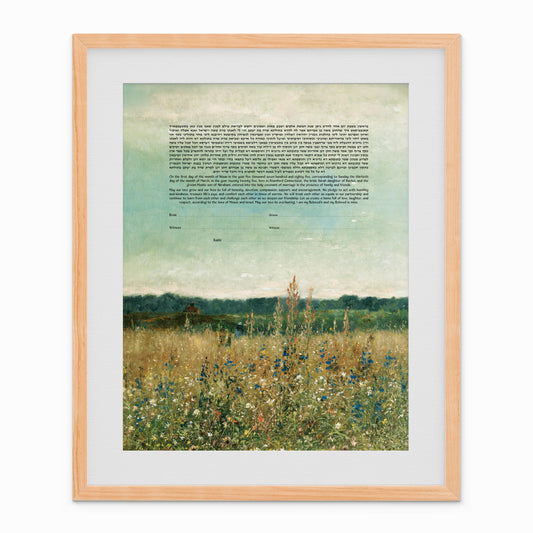
For many modern couples, the ketubah has shifted from a religious requirement into something more personal: a piece of wedding art that holds the words of the day.
Unlike a bouquet, invitation, or ceremony program, a ketubah does not disappear after the wedding. It can hang in your home for years as a daily reminder of the promises you made and the life you began together.
That is why many secular and interfaith couples still find it meaningful. The ketubah gives the ceremony a moment of reflection, creates a tangible keepsake, and turns your commitment into something visible.
You may not need a ketubah to be married. But you may still want one because it gives beauty, language, and permanence to the commitment you are already making.
So, Should You Get a Ketubah?
If you want a strictly simple civil wedding with no added rituals, you can absolutely skip the ketubah.
But if you want a meaningful keepsake that connects your wedding to Jewish tradition, family history, or shared values, a modern ketubah can be a beautiful addition. It does not have to be Orthodox. It does not have to be legalistic. It does not have to mention God. It does not even have to include Hebrew if that does not feel right for you.
The best ketubah is the one that honestly reflects your marriage.
Your wedding belongs to you. Your ketubah can, too.
Frequently Asked Questions About Ketubahs for Secular and Interfaith Weddings
Do you legally need a ketubah?
For a civil marriage, no. A ketubah is not what makes your marriage legally valid under state law. Your legal marriage depends on the civil marriage license and the requirements of the place where you are getting married.
Does an Orthodox ceremony need a ketubah according to halacha?
Yes. In an Orthodox Jewish wedding, the ketubah is a halachic requirement and is not just a decorative tradition. The traditional ketubah is a Jewish legal document, usually written in Aramaic, that outlines the husband’s obligations to his wife. Orthodox couples should use a properly prepared traditional ketubah and confirm the details with their officiating rabbi.
Do interfaith couples use ketubahs?
Yes. Many interfaith couples choose a ketubah as a cultural, artistic, or personal part of the wedding. The text can be written so that both partners are honored equally and the wording matches the couple’s actual beliefs and ceremony.
Can a ketubah be English-only?
Yes. For a secular, interfaith, or civil wedding, a ketubah can be English-only if that is what feels most authentic to the couple. Some couples choose Hebrew and English, while others prefer only English so the promises are fully understandable to everyone signing and reading it.
Does a ketubah have to mention God?
No. Modern ketubah texts can be religious, spiritual, poetic, cultural, or completely secular. If mentioning God does not fit your ceremony or relationship, you can choose a text that focuses instead on love, partnership, loyalty, kindness, and building a home together.
Who signs a secular or interfaith ketubah?
That depends on the ceremony and the couple’s preference. Some couples include the two partners, an officiant, and two witnesses. Others include only the couple and witnesses. For non-Orthodox weddings, the signature lines are usually customizable.
Can we write our own ketubah text?
Yes. Many modern couples write their own ketubah text or adapt an existing one. This can be a beautiful option if you want the ketubah to reflect your actual relationship, values, and promises. If you are having a religious ceremony, especially an Orthodox or Conservative one, you should confirm the wording with your rabbi or officiant before finalizing it.
Is a ketubah worth it if we are not religious?
It can be. If you see the ketubah only as a religious requirement, it may not feel necessary. But if you see it as a piece of wedding art, a cultural keepsake, and a written expression of your commitment, it can become one of the most meaningful items from your wedding day.